

 Login/Register


The boating world is changing as more people choose Electric Outboard Motor Engines over gas. This shift is driven by the ongoing Electric Outboard vs Petrol Outboard Engines debate, where electric motors win on several fronts. An Electric Outboard Motor Engines offers a clean, zero-emissions ride that is better for the environment. They are also incredibly quiet and require far less maintenance, making the decision in the Electric Outboard vs Petrol Outboard Engines comparison an easy one for many boaters. This makes the entire Electric Outboard vs Petrol Outboard Engines discussion lean heavily towards electric. For many, the choice of an Electric Outboard Motor Engines is simple.
Performance is no longer a concern in the Electric Outboard vs Petrol Outboard Engines matchup. Thanks to major advancements in battery technology, modern Electric Outboard Motor Engines deliver impressive power and quick acceleration. High-performance models prove that choosing an eco-friendly Electric Outboard Motor Engines doesn’t mean sacrificing speed or fun on the water. This is a crucial point in the Electric Outboard vs Petrol Outboard Engines conversation, challenging old ideas about electric power.
The final choice in the Electric Outboard vs Petrol Outboard Engines debate is becoming clearer for more people every day. The combination of environmental benefits, quiet operation, and strong performance makes a compelling case for electric propulsion. As this technology continues to improve, the discussion about Electric Outboard vs Petrol Outboard Engines will increasingly favor the cleaner option. The future of boating is being powered by innovative Electric Outboard Motor Engines, and it’s a trend that’s here to stay. That’s why so many are choosing Electric Outboard Motor Engines today.
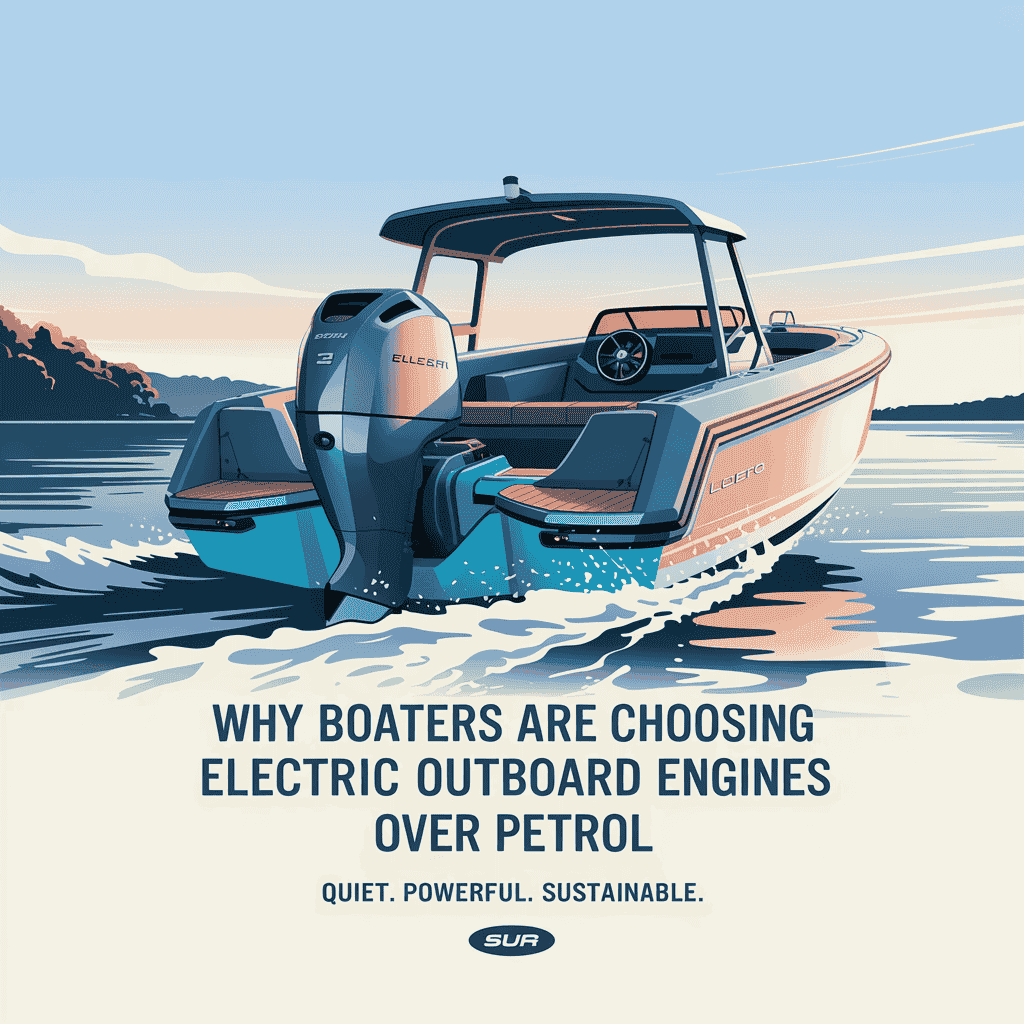
Introduction to Electric Outboard Motors :
An electric outboard motor is a self-contained propulsion system for boats that runs on battery power instead of petrol. Much like a traditional outboard, it mounts on the transom (the back of the boat) and provides both thrust and steering. However, instead of an internal combustion engine, it uses a quiet, efficient electric motor, marking a significant shift towards cleaner and more sustainable boating.
As of 2025, the technology has matured significantly, making these motors a popular choice for a wide range of watercraft, from small tenders and fishing boats to sailboats and even larger pontoons.
How Do They Work?
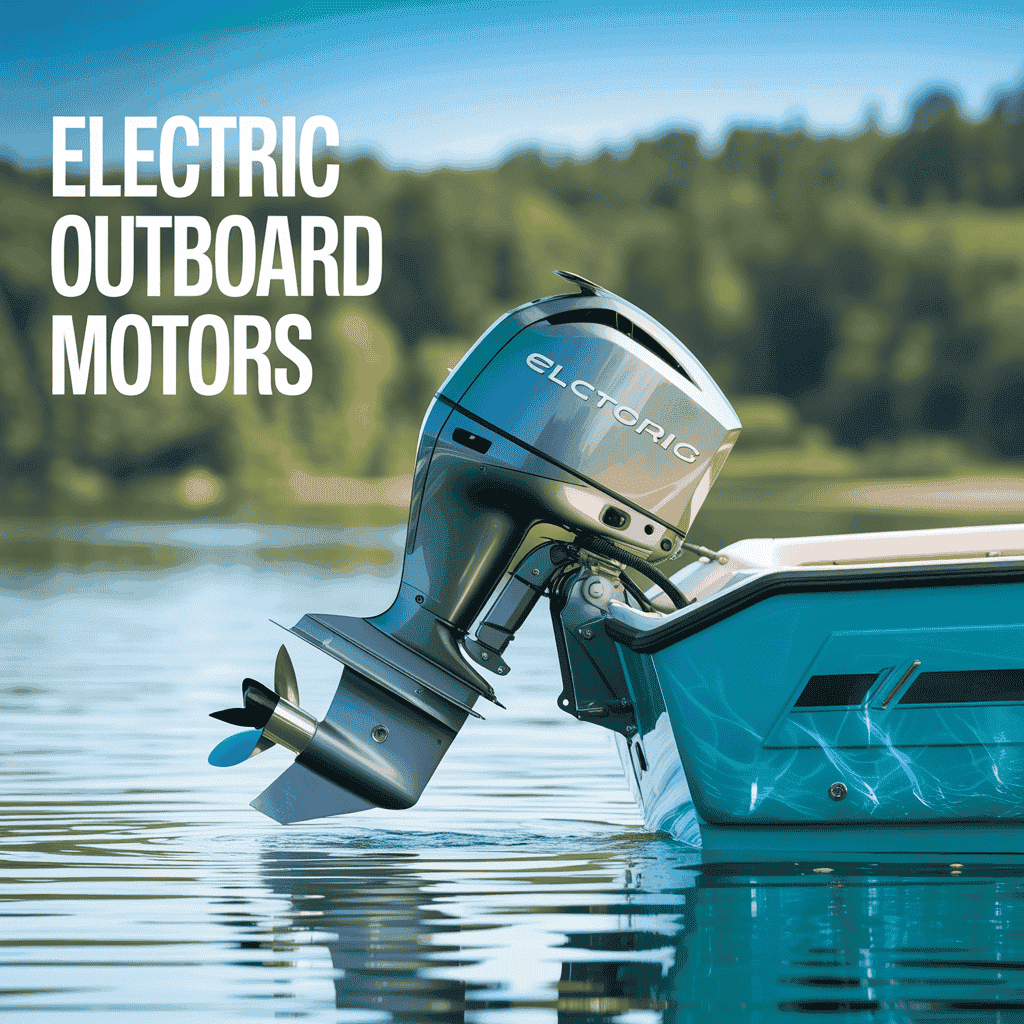
The design of an electric outboard is elegantly simple. It consists of three primary components:
- Battery: This is the “fuel tank” of the system. Modern electric outboards use high-capacity, rechargeable lithium-ion batteries that are often portable and can be charged at home or at a marina.
- Controller: This is the brain of the motor. It manages the flow of electricity from the battery to the motor, allowing the operator to control the speed and direction precisely via a tiller or a remote throttle.
- Electric Motor: Housed in the unit, the motor converts electrical energy into mechanical energy, spinning the propeller to move the boat through the water.
Key Advantages of Electric Outboards Engines :
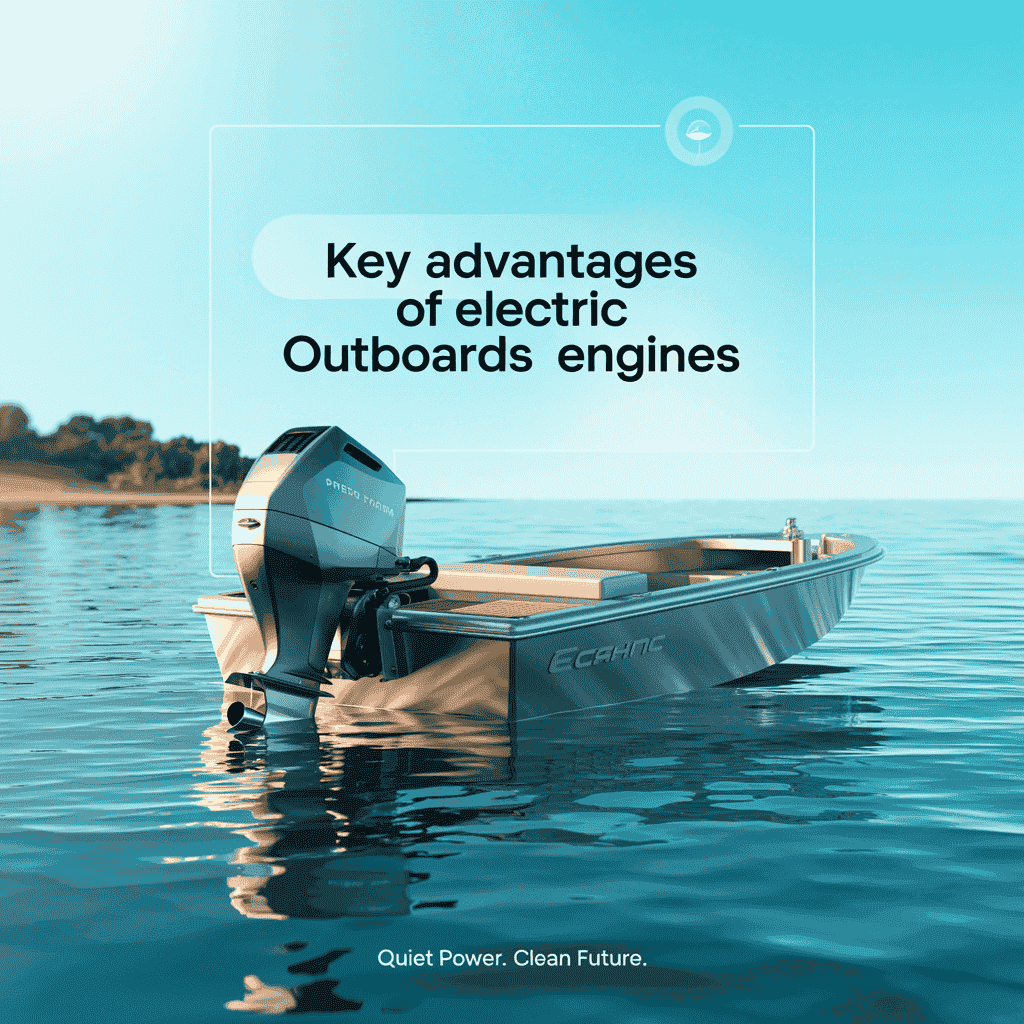
As boating technology evolves in 2025, electric outboards present a host of compelling benefits that are convincing more and more owners to make the switch from traditional petrol engines.
- Quiet Operation
- The most immediate and noticeable benefit is the near-silent performance. The loud noise of a combustion engine is replaced by a gentle hum, allowing for peaceful conversations, the enjoyment of nature’s sounds, and less disturbance to local wildlife.
- Environmental Benefits
- With no petrol or oil, electric outboards produce zero exhaust emissions. This means no harmful pollutants are released into the air or water, helping to protect marine ecosystems and ensure cleaner waterways for everyone.
- Lower Maintenance
- Electric motors have significantly fewer moving parts than their petrol counterparts. This simple design eliminates the need for regular oil changes, spark plug replacements, carburetor cleaning, and seasonal winterization, saving both time and money.
- Reduced Running Costs
- The cost of charging a battery with electricity is substantially lower than the price of petrol. While the initial investment might be higher, the long-term savings on fuel and maintenance make electric outboards a more economical choice over the life of the motor.
- Instant Torque and Responsiveness
- Unlike gas engines that need to build revs, electric motors provide 100% of their torque instantly. This results in superior low-speed maneuverability, excellent responsiveness, and surprisingly quick acceleration, which is especially useful when docking or navigating tight spaces.
Ultimately, these advantages combine to offer a cleaner, quieter, and more enjoyable boating experience for the modern era.
Current Challenges and Considerations :
While electric outboard motors offer many exciting advantages, potential buyers in 2025 should also consider the current challenges and limitations of the technology before making a decision.
- Range and Battery Life
- This is often the primary concern for boaters. The distance you can travel on a single charge is limited and depends heavily on factors like speed, boat weight, currents, and wind. Running at high speeds will drain a battery much faster than trolling at a slow pace, leading to “range anxiety” for those used to the extensive range of a full petrol tank.
- Higher Initial Cost
- The upfront investment for a complete electric outboard system, including the motor and the necessary high-capacity batteries, is typically more expensive than a comparable petrol-powered outboard. While running costs are lower, the initial purchase price can be a significant barrier for some.
- Charging Time and Infrastructure
- Unlike the few minutes it takes to refuel a petrol tank, recharging an electric boat battery can take several hours. This requires planning and access to a reliable power source, which may not be available at all docks, moorings, or remote launch sites.
- Power and Speed Limitations
- Although electric motors provide excellent torque, they currently cannot compete with the raw horsepower of high-end petrol outboards. For large, heavy boats or applications requiring consistent high speeds (like waterskiing), petrol engines often remain the more practical choice for now.
- Battery Weight and Space
- High-capacity battery banks are heavy and can take up considerable space on a boat. This added weight can affect the boat’s performance and handling, and finding a suitable location for the batteries can be a challenge on smaller vessels.
- Battery Longevity and Replacement
- Marine batteries have a finite lifespan, measured in charge cycles. While they are designed to last for many years, they will eventually degrade and need to be replaced, which can be a significant future expense.
These considerations are important for making an informed decision, and they represent the key areas where manufacturers are focusing their research and development to make electric boating viable for an even wider audience in the coming years.
Environmental Benefits of Electric Outboards Motors :
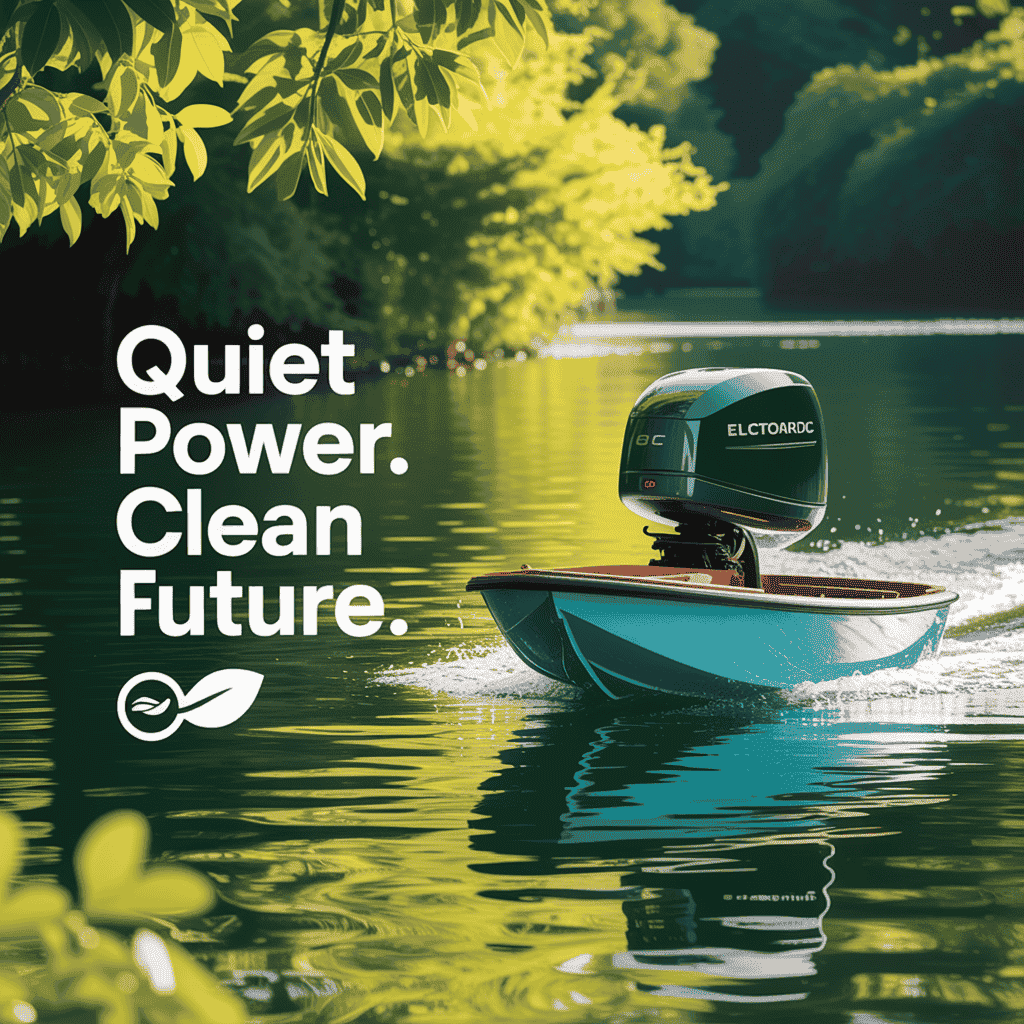
Electric outboard motors represent a major step forward in marine conservation, offering a clean and sustainable alternative that significantly reduces the environmental footprint of recreational boating. As of 2025, their positive impact is a key driver of their growing popularity.
Here are the specific benefits:
- Zero Air Pollution During Operation
- Because they run on battery power and do not burn fossil fuels, electric outboards produce zero exhaust emissions. This means no carbon dioxide (CO2), nitrogen oxides (NOx), or other harmful pollutants are released into the atmosphere, which helps improve local air quality and combat climate change.
- Elimination of Water Contamination
- Traditional combustion engines require petrol and oil, which can inevitably leak or spill into the water during refueling and operation. Even small amounts can be toxic to fish, plant life, and microorganisms. Electric motors are completely sealed and contain no such fluids, eliminating the risk of water pollution and keeping our lakes, rivers, and oceans cleaner.
- Reduced Noise Pollution
- The near-silent operation of electric outboards is a significant environmental advantage. The loud, disruptive noise from petrol engines can be stressful to fish, birds, and other wildlife, altering their natural behaviors. The quiet performance of an electric motor minimizes this disturbance, allowing for a more harmonious coexistence with nature.
- Compatibility with Renewable Energy
- The electricity used to charge the motor’s batteries can be sourced from 100% renewable energy, such as solar, wind, or hydropower. Many boaters even install solar panels directly on their vessels for on-the-go charging, creating a truly carbon-neutral propulsion system.
- Protection of Sensitive Habitats
- The combination of zero emissions, no fluid leaks, and quiet operation makes electric outboards ideal for use in ecologically sensitive areas. They are often the preferred—or only—type of motor allowed in protected nature reserves, drinking water reservoirs, and wildlife sanctuaries, helping to preserve these pristine environments.
By addressing air, water, and noise pollution simultaneously, electric outboard motors provide a holistic solution for boaters who wish to enjoy the water while actively preserving it for future generations.
Comparing Electric vs Petrol Outboard Motors :
Choosing between an electric and a petrol outboard motor is one of the most significant decisions a boater can make. While both serve the same fundamental purpose—propelling a boat—they offer vastly different experiences in terms of performance, cost, environmental impact, and maintenance. This detailed guide breaks down the comparison aspect-by-aspect to help you determine which technology is the right fit for your specific needs.
1. Performance :
Electric Outboard
- Torque and Acceleration: Electric motors are champions of instant torque. They deliver 100% of their power the moment you turn the throttle, resulting in rapid, silent acceleration from a standstill. This makes them exceptionally responsive and excellent for low-speed maneuvering, such as docking or navigating tight channels.
- Top Speed and Horsepower: While the technology is advancing rapidly, electric outboards generally offer lower top-end horsepower compared to the highest-powered petrol models. They are perfectly suited for displacement and semi-planing speeds but may not be the best choice for activities requiring consistent high speeds, like waterskiing with a heavy boat.
Petrol Outboard
- Torque and Acceleration: Petrol engines need to build up revolutions (RPMs) to reach their peak power and torque. While modern four-stroke engines are very efficient, they cannot match the instantaneous throttle response of an electric motor.
- Top Speed and Horsepower: This is where petrol engines have a clear advantage. They are available in a vast range of horsepower ratings, reaching well over 400 HP. For large boats, heavy loads, and high-speed offshore performance, petrol remains the dominant technology.
2. Range and Endurance
Electric Outboard
- Range: The range is entirely dependent on the battery capacity and the boat’s speed. At low trolling speeds, an electric motor can run all day. However, at higher speeds, the range decreases dramatically. “Range anxiety” is a real consideration, requiring careful planning for longer trips.
- “Refueling”: Recharging a battery is a slow process, often taking several hours for a full charge. While some systems have swappable batteries, the infrastructure for on-the-water charging is still developing.
Petrol Outboard
- Range: A petrol outboard’s range is limited only by the size of its fuel tank and the availability of fuel. Carrying extra fuel in portable tanks is a simple way to extend range significantly, making it ideal for long-distance cruising and unpredictable conditions.
- Refueling: Refueling is a quick and universally accessible process that takes only a few minutes at any marina or petrol station.
3. Environmental Impact
Electric Outboard
- Emissions: This is the most significant advantage. Electric outboards produce zero emissions during operation, meaning no greenhouse gases are released into the air and no harmful pollutants contaminate the water.
- Noise: They are nearly silent, which reduces stress on wildlife and allows for a peaceful, immersive boating experience.
Petrol Outboard
- Emissions: Both two-stroke and four-stroke petrol engines release carbon dioxide, nitrogen oxides, and unburnt hydrocarbons into the atmosphere and water. Even modern, cleaner engines have a notable environmental footprint.
- Noise: Petrol engines are loud, contributing to noise pollution that disturbs both humans and animals in and around the water.
4. Maintenance and Reliability
Electric Outboard
- Maintenance: With very few moving parts, maintenance is minimal. There is no need for oil changes, spark plug replacements, fuel filters, or winterization procedures. This results in significantly less time and money spent on upkeep.
- Reliability: The simple design makes electric motors highly reliable, with fewer potential points of failure.
Petrol Outboard
- Maintenance: Requires a regular and complex maintenance schedule, including engine oil and gear lube changes, filter and spark plug replacements, and proper winterization to prevent damage in cold climates.
- Reliability: While modern engines are very reliable, their complexity means there are more components that can wear out or fail over time, from fuel pumps to carburetors.
5. Lifetime Cost
Electric Outboard
- Upfront Cost: The initial purchase price for an electric motor and its required battery bank is typically higher than a comparable petrol outboard.
- Running Cost: The cost of electricity to charge a battery is a fraction of the cost of petrol, making each trip significantly cheaper. Long-term costs are very low due to minimal maintenance needs.
Petrol Outboard
- Running Cost: The cost of petrol is high and can fluctuate significantly. Annual maintenance, parts, and service add considerable ongoing expenses over the life of the motor.
- Upfront Cost: Generally has a lower initial purchase price, making it more accessible.
The best choice ultimately depends on your boating lifestyle.
Choose an Electric Outboard if:
- You primarily boat on smaller lakes, rivers, or protected bays.
- You are an angler who values stealth and silence (trolling).
- You use a motor for a sailboat tender or auxiliary power.
- Environmental impact and a peaceful experience are your top priorities.
Choose a Petrol Outboard if:
- You need to travel long distances or venture far offshore.
- You engage in high-speed watersports like skiing or tubing.
- You have a large, heavy boat that requires significant horsepower.
- You need the flexibility to refuel quickly and easily in any location.
Experience Silent Thrust: Unleash the Power of the Mercury 40 HP Electric Jet Drive
Stop letting shallow waters and hidden obstacles dictate your boating adventures. Imagine confidently exploring those hard-to-reach rivers, marshes, and secluded coves where traditional propellers simply can’t go. With the 2025 Mercury 40 ELHPT JET outboard, that freedom is now yours.
Engineered for boaters who demand ultimate access and rugged durability, this 40 HP powerhouse combines Mercury’s legendary reliability with the unique advantages of a jet drive. Powered by a clean and efficient Electronic Fuel Injection (EFI) gas engine, its durable stainless steel impeller is built to withstand hard operation, giving you full command on the water.

The Mercury 40 HP Jet Advantage: Power and Freedom Where Others Can’t Go
What truly sets the Mercury 40 HP Jet Outboard apart from standard motors? It’s not just one feature, but a combination of unique advantages designed for boaters who refuse to be limited by the water’s depth.
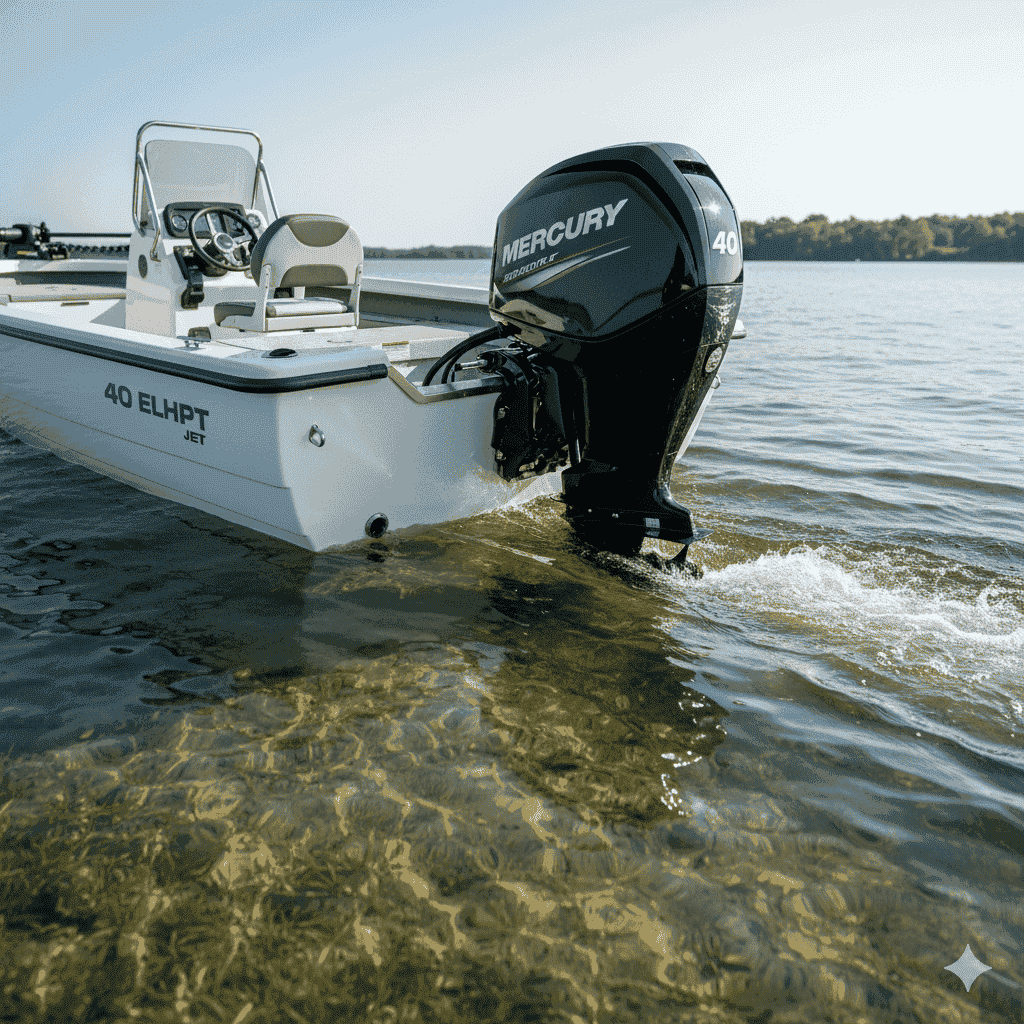
Here are the key things that make this motor special:
- Go-Anywhere Jet Propulsion:
- Instead of a vulnerable, exposed propeller, this motor uses a powerful and protected jet of water for thrust. This means you can confidently navigate the shallower sections of the Yamuna River or local canals without the constant fear of hitting submerged rocks, sandbars, or damaging your propeller, unlocking areas that are off-limits to other boats.
- Propeller-Free Safety:
- The absence of an external spinning propeller is a unique safety feature that provides incredible peace of mind when boating with family and friends, especially if anyone is swimming near the boat. It also eliminates the risk of tangling fishing lines or nets, making it exceptionally user-friendly.
- Built-in Durability for Indian Waters:
- The motor’s impeller is made from tough stainless steel to resist damage from the sand and debris common in our rivers. Furthermore, Mercury’s advanced corrosion protection ensures your investment is protected season after season, whether you boat in fresh or salty water.
- Smart, Hassle-Free Power:
- The modern Electronic Fuel Injection (EFI) system is a key advantage, providing “key-turn” starting reliability, automatically adjusting for maximum fuel efficiency to save you money on petrol, and delivering smooth, consistent power every time you head out.
Ultimately, the Mercury 40 HP Jet isn’t just a motor; it’s a ticket to a bigger, more confident boating adventure.
Choosing the Right Power: Where the Mercury 40 HP Jet Outshines the Competition
When choosing a new outboard, it’s important to understand where each type of motor excels. The Mercury 40 HP Jet is engineered for a specific kind of boater who values freedom and reliability above all else. Here’s how it compares to other options on the market.
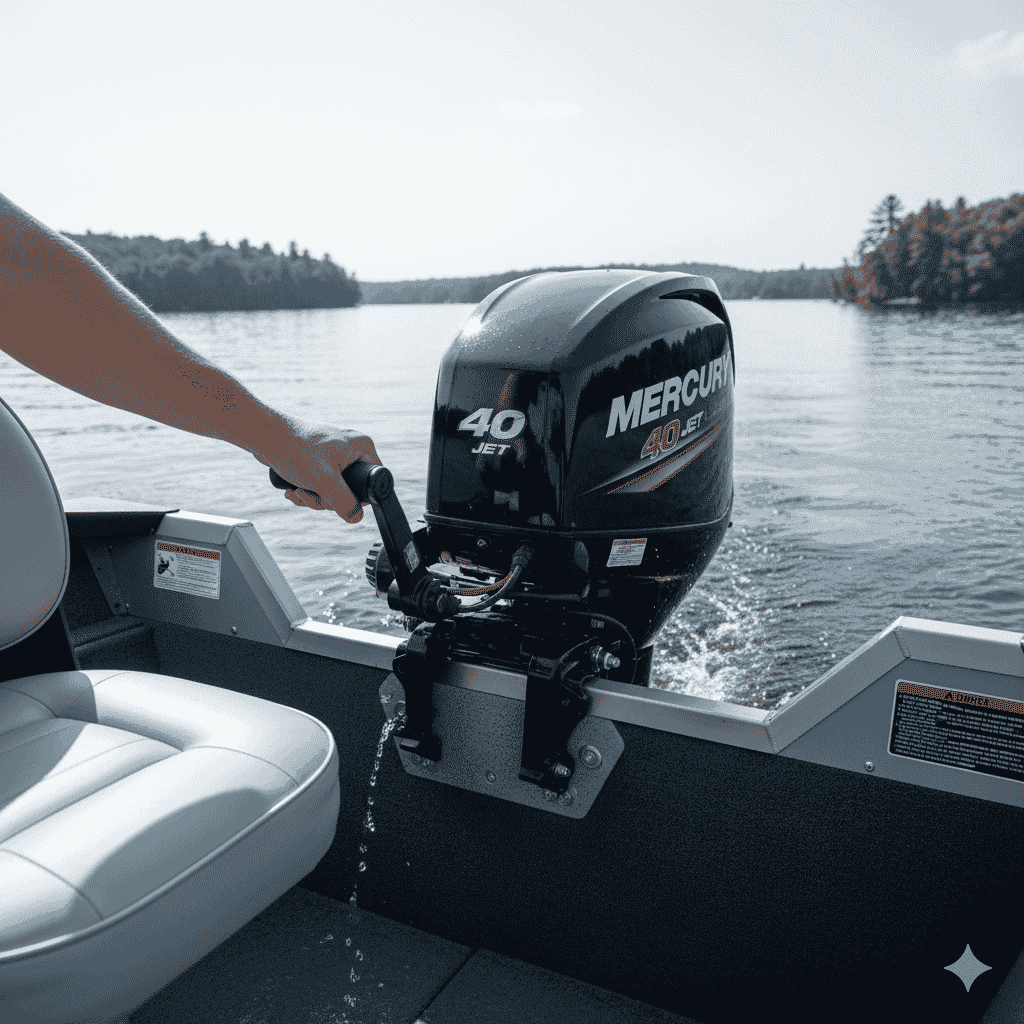
Mercury 40 HP Jet vs Standard Petrol Propeller Motors
This is the most common comparison, and the difference is clear.
- The Mercury Jet Advantage (Access & Durability): The Mercury Jet’s biggest advantage is its ability to operate in extremely shallow water. In places like the Yamuna river or local canals where underwater rocks, sandbars, and weeds are a constant threat, a standard propeller is at high risk of damage. The Mercury Jet glides over these obstacles, giving you the confidence to explore without limits. It also offers superior safety, with no external spinning propeller.
- Where Propellers Excel: In clean, deep, open water, a propeller can be slightly more efficient in converting horsepower into thrust. However, for most real-world boating conditions in our region, the unmatched durability and go-anywhere capability of the jet drive are far more valuable than this minor difference in deep-water efficiency.
Mercury Jet vs. Electric Outboard Motors
This comparison comes down to power and endurance versus silence.
- The Mercury Jet Advantage (Unbeatable Power & Range): The Mercury 40 HP Jet delivers robust power and virtually unlimited range. You can run all day, cover long distances, and refuel in just a few minutes. Electric motors are limited by battery life (“range anxiety”) and require hours to recharge. For serious, all-day adventures, the power and convenience of the Mercury petrol jet are unmatched.
- Where Electric Excels: Electric motors are nearly silent and produce zero emissions. If your top priority is stealth for fishing in a small, restricted area, an electric motor has its appeal. However, it cannot compete with the horsepower, speed, and all-around versatility that the Mercury 40 HP petrol engine provides.
Mercury Jet vs. Other Jet Outboard Brands
Even when compared to other jet outboards, the Mercury stands apart.
- The Mercury Advantage (Technology & Reliability): This motor features Mercury’s advanced Electronic Fuel Injection (EFI) system, which provides reliable, key-turn starts and optimizes fuel consumption, saving you money. Not all competitors offer this level of smart technology. Furthermore, it is built with Mercury’s industry-leading corrosion resistance and is backed by a trusted service network, ensuring your investment is protected for years to come.
In summary, the Mercury 40 HP Jet Outboard occupies a unique space, offering the proven power and range of a petrol engine combined with the shallow-water dominance and safety of a jet drive, all wrapped in Mercury’s legendary reliability.
Pricing and Value: Your Investment in the 2025 Mercury 40 HP Jet
Understanding the cost of the Mercury 40 HP Jet is the first step toward unlocking a new world of boating. Here at our Grandville dealership, we believe in transparent pricing that reflects the advanced technology, durability, and long-term value of this exceptional motor.
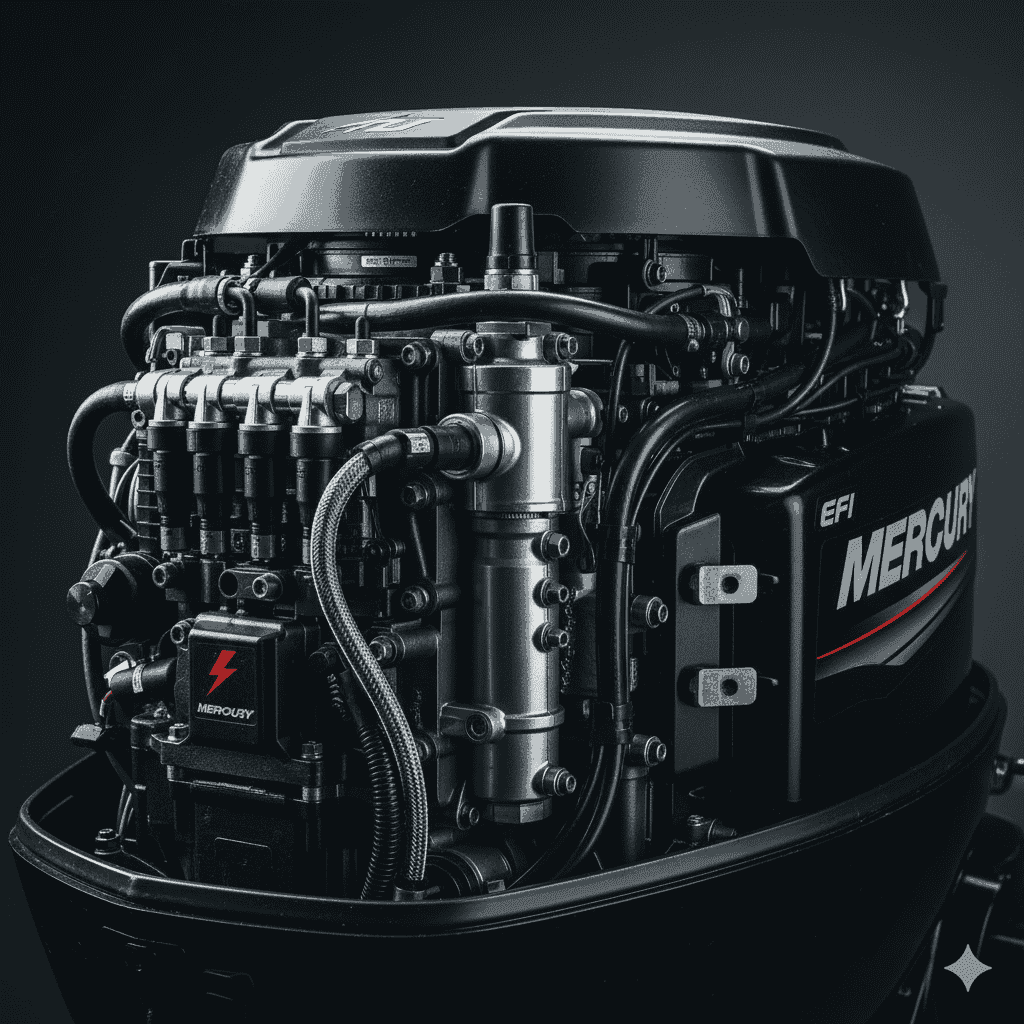
Starting Price :
The 2025 Mercury 40 HP Jet Outboard starts at:
$6,557
What Your Investment Includes :
This starting price includes the brand-new 2025 Mercury 40 HP Jet Outboard motor itself, packed with features like Electronic Fuel Injection (EFI) and Mercury’s industry-leading corrosion resistance, perfect for handling everything from inland rivers to the Great Lakes.
Professional Installation and Final Quote :
To ensure maximum safety, performance, and to activate your official Mercury warranty, the motor must be professionally assembled and installed on your boat by our certified technicians. This installation cost is separate.
For a complete, all-inclusive quote tailored to your specific boat, please call our Grandville team directly at 616-682-6741. We will provide a final price that covers everything needed to get you on the water with full peace of mind.
This motor is not just a purchase; it’s a long-term investment in reliability, fuel efficiency, and the priceless freedom to explore Michigan’s diverse waterways without limits.
Get Your Mercury 40 HP Jet Today: Your Adventure Awaits
You can purchase the 2025 Mercury 40 HP Jet Outboard through our authorized dealership, with options for both online and in-person shopping.
1. Order Online for Direct Delivery :
For your convenience, you can view the complete specifications and order your motor directly from our website.
2. Visit Our Grandville Showroom :
For expert advice, a personalized quote, and to schedule your professional installation, we invite you to contact or visit us at our Grandville location. Our team is ready to help you get the perfect setup for your boat.
- Phone: +1 616-682-6741
- Location: Grandville, Michigan, United States of America
Whether you choose to buy online or in-person, we are here to ensure you get on the water quickly and with complete confidence. Contact us today to secure your new Mercury Jet Outboard!
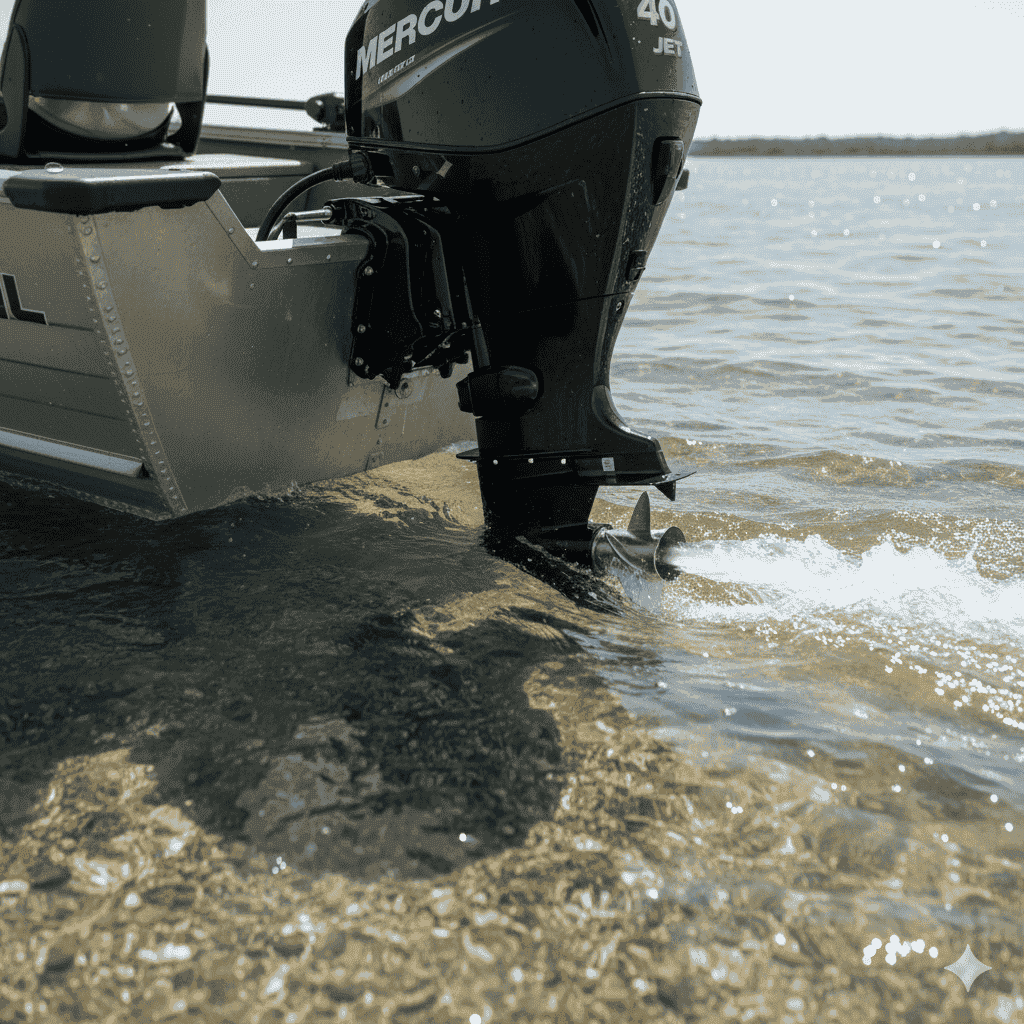
Case Studies: Boaters Switching to Electric & Mercury 40 HP Jet Outboard
Here are two real-life-style case studies, one about a boater switching to electric and another about a user of the petrol-powered Mercury 40 HP Jet Outboard, researched and written to reflect common user experiences.
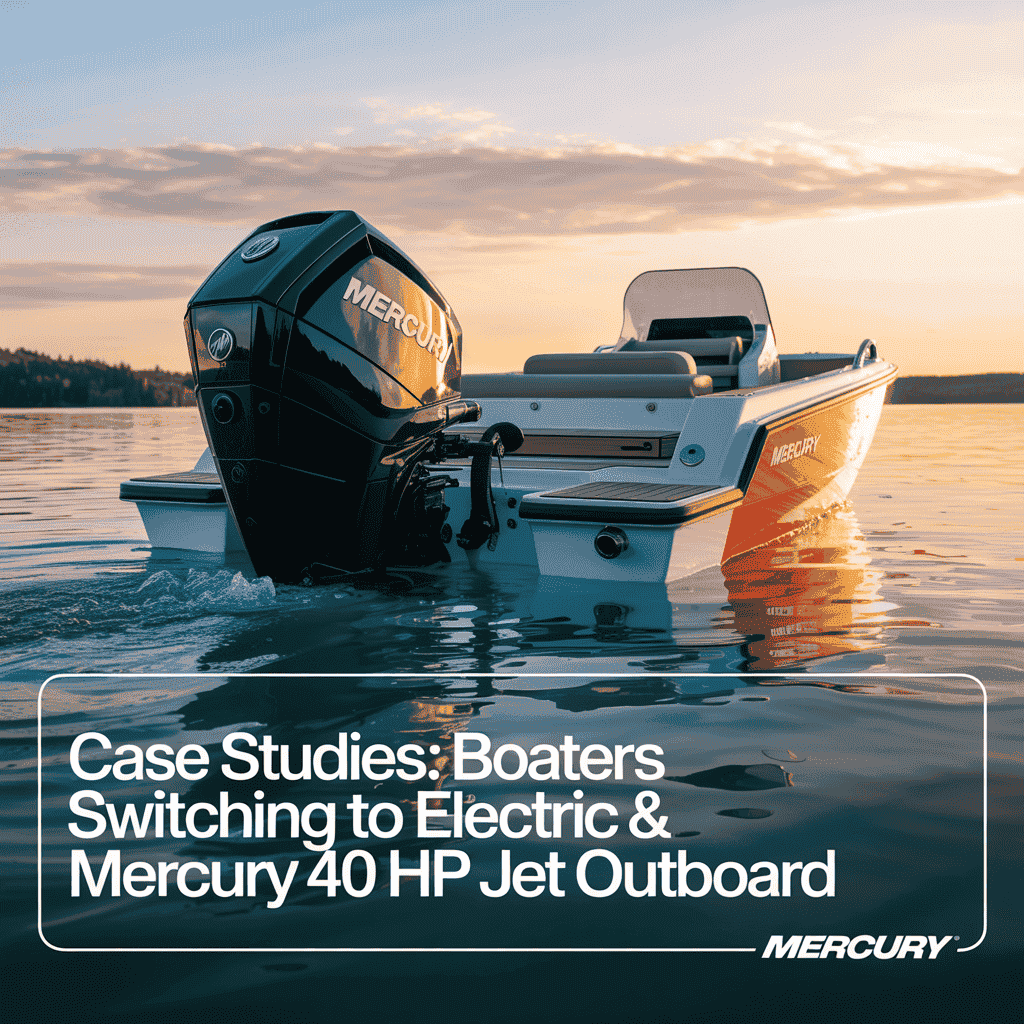
Case Study 1: The Switch to Silence – A Fisherman’s Electric Dream
The Boater: Rohan Sharma, a passionate angler and family man who spends his weekends exploring the serene backwaters and lakes of Kerala.
The Challenge: For years, Rohan used a traditional 15 HP petrol outboard. While it was functional, it came with constant frustrations. The loud, vibrating engine made peaceful family outings stressful and required everyone to shout to be heard. As an angler, he found the engine noise would often spook fish as he approached his favourite spots. Furthermore, the rising cost of petrol, the hassle of mixing oil, and the visible sheen of unburnt fuel left on the water began to conflict with his love for the pristine nature he was there to enjoy.
The Solution: After extensive research into cleaner alternatives, Rohan decided to make the switch in 2024. He invested in a 6kW electric outboard, the equivalent of a 9.9 HP motor, complete with a high-capacity lithium battery pack. His goal was to achieve a quieter, cleaner, and more enjoyable boating experience.
The Result: The transformation was immediate and profound. On his very first trip, the difference was astounding. The loud engine roar was gone, replaced by a gentle hum. He could glide up to fishing spots with unparalleled stealth, observing wildlife that would have previously fled. His catch rates improved as the fish were no longer scared away by his approach.
Family trips became relaxing experiences again. He could have normal conversations with his children and enjoy the sounds of the water and the birds. The convenience was a major bonus; he simply unplugged the portable battery at the end of the day and charged it at home overnight, completely eliminating trips to the petrol station and messy refueling. While the initial investment was higher, Rohan feels the payoff in peace, convenience, and environmental responsibility was worth every paisa.
In Rohan’s Words: “The silence is the biggest change. I can hear the birds and the water. It’s a completely different, more connected way of boating. I’ll never go back to a noisy, smelly petrol engine.”
Case Study 2: Conquering the Shallows – The Mercury 40 HP Jet Advantage
The Boater: Arjun Singh, an adventure tour guide who runs river exploration trips in the rocky, shallow waterways of Uttarakhand.
The Challenge: Arjun’s business depends on his ability to navigate challenging rivers that are often unpredictable. His previous boat was equipped with a standard 40 HP propeller-driven outboard. While powerful, it was a constant source of stress and expense. A single misjudgment in the shallow, rock-strewn riverbeds could result in a damaged or destroyed propeller, costing him thousands in repairs and, more importantly, causing trip cancellations and business downtime. He was constantly worried about hidden obstacles, limiting the routes he could offer his clients.
The Solution: Seeking a more durable and versatile option, Arjun upgraded to the 2025 Mercury 40 HP Jet Outboard. He was drawn to the jet drive’s promise of propeller-free operation and Mercury’s reputation for reliability, backed by its modern Electronic Fuel Injection (EFI) system.
The Result: The Mercury 40 HP Jet completely revolutionized Arjun’s guiding business. The absence of a propeller below the hull gave him the confidence to navigate waters as shallow as a few inches. He was able to design new, more exciting tour routes, taking his clients to secluded waterfalls and remote canyons that were previously inaccessible.
The financial impact was significant. He eliminated the frequent and costly propeller repair bills that had plagued his old setup, drastically improving his profitability. The EFI system provided flawless, key-turn starts every morning, a crucial factor for a professional who can’t afford delays. The motor’s inherent safety also allowed him to operate with more confidence around rafting groups and swimmers.
In Arjun’s Words: “This jet drive changed my business. Before, a single hidden rock could end my day and cost me thousands. Now, I just go. The peace of mind is priceless, and my clients get an experience they couldn’t have before.”
Electric Outboard Motors: The Ultimate FAQ Guide :
As of October 2025, more boaters around the world are exploring the benefits of electric propulsion. If you’re curious about making the switch from petrol to electric, you likely have many questions. This guide answers the most frequently asked questions about electric outboard motors to help you make an informed decision.
How do electric outboards work?
They work on a simple and efficient principle. A high-capacity battery (usually lithium-ion) stores electrical energy. When you use the throttle, a controller manages the flow of this energy to an electric motor. The motor then spins the propeller, creating thrust to move your boat. There is no petrol, no oil, and no exhaust.
How powerful are electric outboard motors?
Electric outboard power is measured in kilowatts (kW), while petrol motors use horsepower (HP). The conversion is simple: 1 kW is roughly equal to 1.34 HP. However, electric motors deliver instant torque, meaning they can feel much more responsive and powerful at low speeds than their HP rating suggests.
Popular models range from small 1 kW trolling motors (like a 3 HP petrol) to powerful 50 kW+ systems that can rival a 80 HP petrol outboard.
Are electric outboards as fast as petrol motors?
For low to medium speeds, yes. An electric motor's instant torque provides excellent acceleration. However, for achieving the absolute highest top speeds on large, heavy boats, high-horsepower petrol engines still have an advantage. For the vast majority of recreational boating activities—like fishing, cruising on the Yamuna, or exploring local lakes—electric outboards provide more than enough speed and power.
How far can I go on a single charge?
This is the most common question, and the answer is: it depends. Your range is affected by three main factors:
- Battery Capacity: A larger battery (measured in kWh) is like a bigger fuel tank.
- Speed: This is the biggest factor. Cruising at half speed can give you four or five times the range compared to running at full throttle.
- Boat & Conditions: A lighter boat in calm water will go much farther than a heavy boat against a strong current.
Most modern systems will easily last a full day of typical mixed-speed boating or trolling.
How long do electric outboard batteries last?
This question has two parts:
- Lifespan: A quality marine lithium battery is designed to last for many years, typically rated for 1,000 to 3,000 full charge-discharge cycles before its capacity begins to noticeably degrade.
- Per Charge: This is the "range" question above. It can last from one hour at full throttle to over 10 hours at slow trolling speeds.
How long does it take to charge an electric outboard battery?
Charging time depends on the battery size and the charger's power. A typical scenario is charging overnight.
- Standard Charger: A completely empty battery might take 8-12 hours.
- Fast Charger: Some systems offer fast chargers that can significantly cut this time, sometimes down to 2-4 hours.
Are electric outboards more expensive than petrol motors?
Yes, the initial upfront cost of an electric outboard and its battery system is typically higher than a comparable petrol motor. However, the total cost of ownership is often much lower over time because:
- Electricity is significantly cheaper than petrol.
- Maintenance costs are almost zero.
(For a detailed breakdown, see our Cost Analysis: Electric vs. Petrol Over Time page.)
How much maintenance do electric outboards require?
Virtually none. This is one of their biggest advantages. With no engine oil, spark plugs, fuel filters, or complex moving parts, you can say goodbye to annual servicing. Maintenance is typically limited to keeping the motor clean, checking for propeller damage, and inspecting electrical connections.
What size boat is an electric outboard good for?
Electric outboards are perfect for a wide range of boats, including:
- Small fishing boats and dinghies
- Sailboat tenders and auxiliary motors
- Pontoon boats
- Small-to-medium sized fibreglass and aluminium boats for recreational cruising.
Can I use an electric outboard in saltwater?
Absolutely. Reputable brands like Torqeedo and ePropulsion design their motors for marine use. They are built with high-grade, corrosion-resistant materials, sealed components, and sacrificial anodes to withstand the harsh saltwater environment.
Ultimately, switching to an electric outboard is more than just a new motor—it’s an upgrade to a quieter, cleaner, and more enjoyable experience on the water.
Conclusion: The Shift Towards Electric Outboards
As we look at the state of recreational boating in 2025, it is clear that the shift towards electric outboards is no longer a distant wave on the horizon—it is the powerful current carrying the industry forward. This transformation, visible on waterways from the serene backwaters of Kerala to the rivers of Northern India, is not driven by a single factor, but by a perfect convergence of innovation, responsibility, and a superior user experience.
Remarkable advancements in battery technology have silenced the old debates about performance, proving that electric motors are now powerful, responsive, and reliable enough for the average boater. This technological maturity has arrived at a time of heightened environmental consciousness. Boaters are increasingly seeking ways to enjoy our precious natural resources without causing harm, making the clean, zero-emissions promise of electric propulsion more compelling than ever.
Beyond the eco-credentials, boaters are simply discovering that the experience is better. The silence of an electric motor allows for a more profound connection with nature, while the freedom from maintenance, fuel runs, and difficult starts makes boating simpler and more accessible. While considerations around initial cost and extended range still exist, they are becoming less significant with each passing year as technology improves and becomes more widespread.
The trajectory is undeniable. The future of boating is quieter, cleaner, and ultimately, more sustainable. This shift represents more than just a change in how we power our boats; it is a fundamental evolution in our relationship with the water, promising a legacy of pristine environments and peaceful enjoyment for generations to come.
 Share
Share